How Thai Massage as Assisted Stretching Helps Athletes Become More Flexible

Tight hips, stiff hamstrings, restricted shoulders, and a cranky lower back can change the way an athlete moves long before pain shows up. A runner shortens the stride. A hockey player loses rotation. A lifter compensates through the spine. A martial artist cannot open the hips with control.
Flexibility is not just about touching the toes. For athletes, it is the ability to move through useful ranges of motion with enough ease, control, and confidence to perform well. Thai massage can support that goal because it works like assisted stretching, blending passive movement, pressure, breathing, and gradual range work.
This article is informational only and is not medical advice. Athletes with injuries, nerve symptoms, recent surgery, or ongoing pain should speak with a qualified health professional before starting any bodywork program.

Thai massage is movement-based bodywork
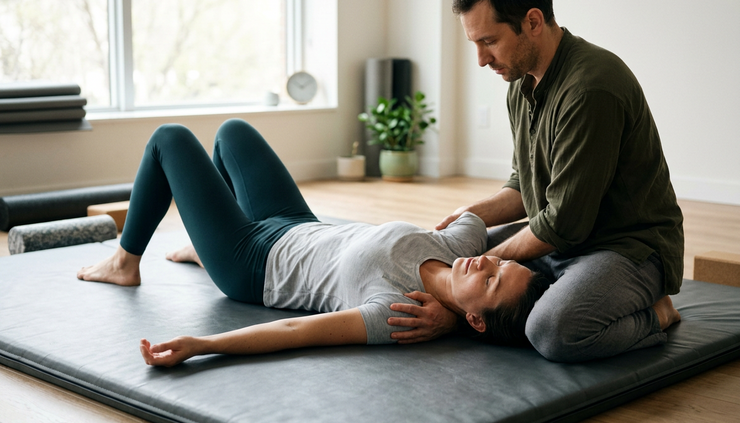
Thai massage looks different from a standard oil massage. It usually happens fully clothed on a padded mat, not on a massage table. The practitioner uses hands, forearms, elbows, knees, or feet to apply pressure and guide the body through stretches.
Because of that, people often describe it as “yoga with assistance.” That description is useful, but it is not complete. Thai massage is not yoga class. The athlete stays mostly passive while the practitioner positions the body, supports the joints, and adjusts the stretch based on breathing, resistance, and tissue response.
A session may include:
Gentle rocking
Compression along large muscle groups
Assisted hip, shoulder, and spine movements
Passive stretches held for short periods
Rhythmic transitions from one position to another
Breath cues to help reduce guarding
For athletes, this matters because many flexibility limits are not only about short muscles. They can also involve protective tension, poor recovery, unfamiliar ranges, or a nervous system that does not yet trust a position. Thai massage gives the body repeated, supported exposure to those ranges.
Assisted stretching helps athletes relax into range
Stretching on your own has value, but it has limits. When an athlete stretches alone, they also have to stabilize, balance, choose the angle, and judge how hard to push. That can create extra tension.
Assisted stretching removes some of that workload. The practitioner supports the limb or body segment, which allows the athlete to soften into the position. This can make it easier to find a stretch that feels specific rather than forced.
For example, a soccer player stretching the hamstrings alone may pull the leg up with a strap and feel strain behind the knee. In a Thai massage session, the practitioner can adjust hip angle, knee bend, foot position, and pressure until the stretch lands more clearly in the hamstring belly. Small changes often make a big difference.
The goal is not to push harder. The goal is to create a better stretch with less guarding.
That is one reason Thai massage can be helpful for athletes who already train hard. Many athletes are used to effort. They may treat stretching like another workout and push until the body resists. Assisted stretching encourages a different skill: relaxing while range increases gradually.
Flexibility improves when the nervous system feels safe
A muscle does not lengthen well when the body feels threatened. If a stretch is too intense, the nervous system may respond by increasing tension. That protective response can make the athlete feel even tighter after the session.
Thai massage can help because it often uses rhythm, supported positioning, and gradual pressure. These elements can signal safety. The athlete does not have to fight gravity or hold a pose alone. The practitioner controls the speed and depth.
Breathing also plays a role. Slow exhalations during a stretch can reduce unnecessary bracing. Many practitioners time movement with breath, easing into range as the athlete exhales.
This does not mean Thai massage magically “turns off” tightness. It means it can create conditions where the body is more willing to explore range. Over time, that exposure may help an athlete feel less restricted in common movement patterns.
Flexibility is partly physical and partly neurological. A good assisted stretch respects both.

Thai massage targets the areas athletes commonly overuse
Every sport has its own movement demands, but several areas tend to get tight across training styles.
Hips and hip flexors
Runners, cyclists, skaters, lifters, and field-sport athletes often load the hips repeatedly. Thai massage can include lunging positions, supported hip extension, external rotation, and gentle compression around the glutes and thigh muscles.
Better hip mobility may help an athlete access longer strides, deeper squats, smoother rotational movement, and less compensation through the lower back.
Hamstrings and calves
Hamstrings and calves absorb a huge amount of force in sprinting, jumping, cutting, and lifting. When they feel tight, athletes often stretch aggressively. That can irritate tissue if done too hard.
Thai massage can approach these areas through gradual leg lifts, bent-knee variations, foot positioning, and compression before stretching. This helps prepare the tissue instead of yanking on it cold.
Shoulders and chest
Swimmers, climbers, volleyball players, tennis players, and lifters often deal with restricted shoulder movement or a tight chest. Thai massage may include shoulder circles, assisted arm lines, chest opening positions, and pressure around the upper back.
The aim is not to create loose shoulders with no control. Athletes need mobility they can use. Good assisted work opens range without forcing the joint beyond what feels stable.
Spine and rib cage
Rotation matters in golf, baseball, tennis, hockey, paddling, martial arts, and many field sports. Thai massage often works with gentle spinal twists, side bends, and rib-cage opening positions.
A slow, supported twist can feel very different from forcing a stretch alone. The practitioner can stabilize the body and keep the movement smooth.
Thai massage can support recovery between training sessions
Flexibility does not improve well when the body is overloaded all the time. Athletes need recovery for tissue quality, joint motion, and training adaptation.
Thai massage may help recovery in several practical ways:
It encourages relaxation after high-intensity training.
It brings attention to areas that feel restricted or overworked.
It uses movement without another heavy training load.
It can reduce the feeling of stiffness after repeated sessions.
It may help athletes downshift before sleep or rest days.
The pressure and stretch level should match the training phase. A deep, intense session the day before a race, meet, or game may not be wise. A gentler session focused on range, relaxation, and comfort is usually a better choice close to competition.
For harder bodywork, many athletes prefer scheduling it after demanding training days or on recovery days, leaving enough time before peak performance.
Flexibility gains need consistency, not force
One Thai massage session can make an athlete feel looser right away, but lasting flexibility usually takes repeated exposure. The body adapts to what it experiences often.
Think of Thai massage as one part of a flexibility plan, not the whole plan. It works best alongside active mobility, strength training through range, warm-ups, and sport-specific movement.
A balanced plan might include:
Daily mobility snacks Five to 10 minutes of easy movement for hips, shoulders, ankles, or spine.
Strength at end range Split squats, controlled leg lifts, deep squat holds, Romanian deadlifts, or shoulder stability work, chosen for the athlete’s sport and ability.
Thai massage once or twice a month More often during heavy training blocks if the athlete responds well and recovers from it.
Easy stretching after training Low-intensity stretches to cool down, not force major change when the body is tired.
Rest and sleep Tightness often feels worse when recovery is poor.
Passive flexibility is useful, but athletes also need active control. A gymnast, goalie, sprinter, or weightlifter does not benefit from range they cannot manage under load. Thai massage can open the door, then training teaches the body how to use that new space.
What a session may feel like
A good Thai massage session should feel specific, steady, and controlled. Some positions may feel intense, especially for athletes with dense muscle tone or limited range. Still, intense should not mean sharp, numbing, or overwhelming.
Clear communication matters. The athlete should speak up if a position causes joint pain, tingling, pinching, or a sense of strain. The practitioner can modify the angle, reduce pressure, or skip that movement.
Common session flow may look like this:
The practitioner starts with gentle compression and rocking.
Larger muscle groups are warmed with pressure.
Assisted stretches begin in comfortable ranges.
The practitioner gradually explores hips, legs, back, shoulders, and neck.
The session ends with calmer, grounding movements.
Many athletes notice the biggest change not during the deepest stretch, but after they stand up and walk. The body may feel lighter, warmer, or less guarded. Range may feel easier, even if no single stretch felt dramatic.
Who may benefit most
Thai massage can be especially useful for athletes who feel stiff despite regular training. It may fit well for:
Runners with tight calves, hips, and hamstrings
Cyclists with hip flexor and lower-back tension
Lifters who struggle with squat depth or overhead position
Martial artists who need hip mobility and rotation
Swimmers with restricted shoulders and upper back
Recreational athletes who sit for long hours between workouts
It can also help athletes who dislike static stretching. Because Thai massage includes movement, pressure, and support, it can feel more engaging than holding one position alone.
Still, it is not right for every situation. Athletes should avoid or modify Thai massage when dealing with acute injuries, suspected tears, uncontrolled inflammation, fever, blood clot concerns, certain medical conditions, or any situation where a health professional has advised against massage or stretching.
How to get the most from Thai massage
The best results come when the session is matched to the athlete’s training, sport, and tolerance. Before the session, it helps to tell the practitioner what matters most.
Useful details include:
Current sport and training schedule
Areas that feel tight or limited
Recent injuries or sensitive joints
Upcoming competitions
Movements that feel restricted
Preference for lighter or deeper pressure
During the session, use simple feedback. A stretch around 5 to 7 out of 10 is often plenty. If holding the breath feels necessary, the stretch is likely too strong.
After the session, keep movement light. A walk, gentle mobility, or easy cycling can help the body integrate the work. Heavy lifting or intense intervals immediately after deep assisted stretching may not feel good for everyone.
Hydration, food, and sleep still matter. Thai massage is helpful, but it cannot replace recovery basics.

Thai massage works best when it respects performance
Athletes do not need flexibility for its own sake. They need range that supports better movement, cleaner technique, and lower strain during sport. Thai massage can help by making stretching more precise, supported, and calm.
The key is using it wisely. Avoid chasing extreme positions. Avoid treating pain as progress. Look for better movement quality, easier breathing in stretched positions, and improved comfort in the ranges the sport actually requires.
For many athletes, Thai massage becomes a useful bridge between recovery and mobility training. It helps the body relax into range, then active training helps keep that range available.
A flexible athlete is not the one who can be pushed the farthest on a mat. It is the one who can move well, recover well, and return to training with more freedom.


Comments